
Diversification and Adaptation Keep Butler Orchard Growing
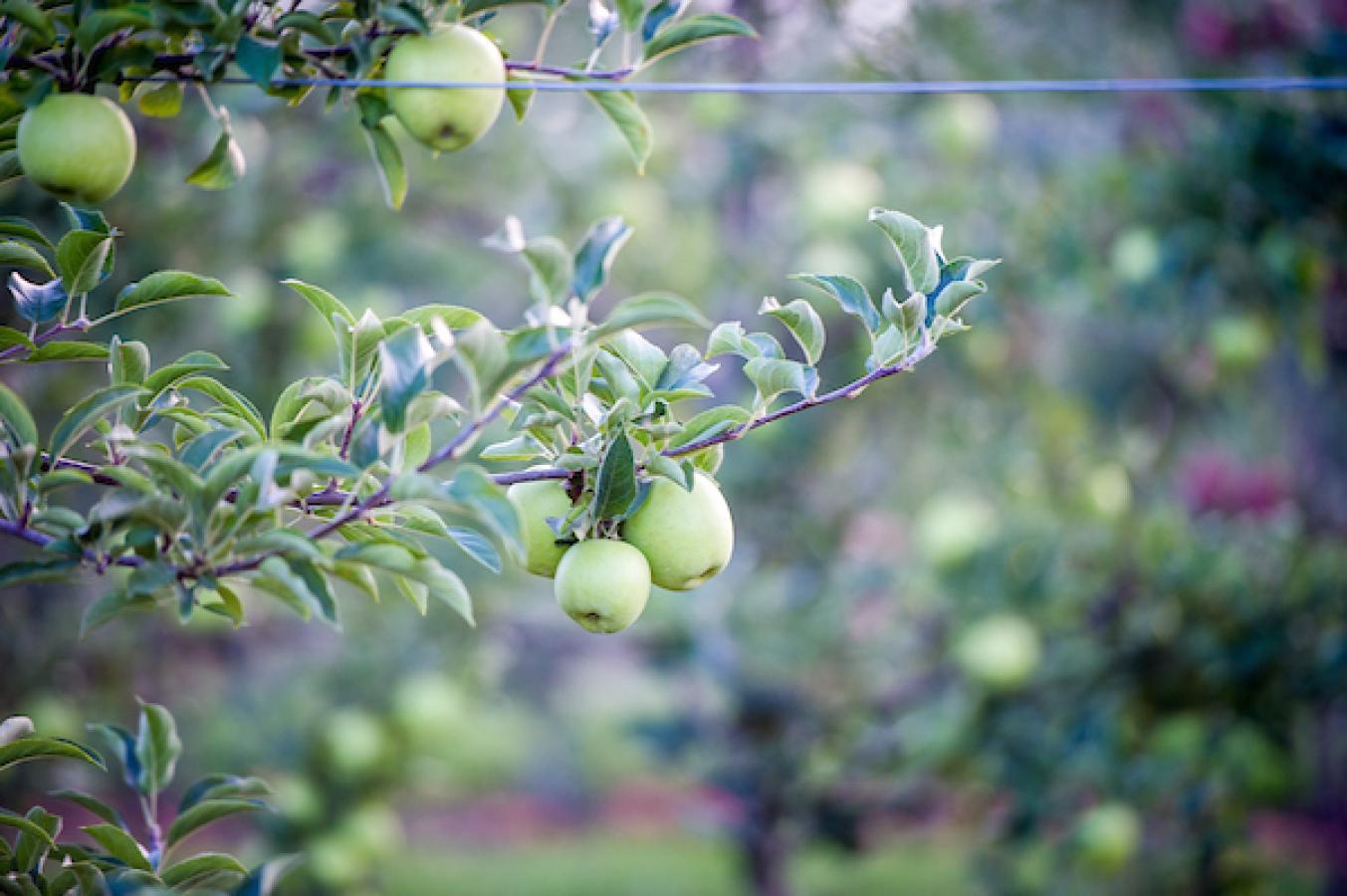
“We have absolutely seen climate change,” said Tyler Butler, general manager of Butler Orchard, whose family has been operating in Germantown, Maryland, since 1950. “It’s not about it being super hot; it’s about drastic changes in temperature at different times. The strawberries come sooner than ever, and frost in the spring after a warm spell can ruin the whole crop.”
That’s why it’s been important for the Butlers to lean into diversification; if the strawberries fail, right behind them, he has blueberries and then sour cherries. Come summer, he has flowers, tomatoes and herbs. There are apples and pumpkins in the fall and Christmas trees in December.
And yet, despite all that variety, their produce only provides 20% of the farm’s revenue. The rest comes from an on-farm market that sells produce, baked goods and décor (35%) and agrotainment, which includes a festival for every season and on-farm events (45%).
Butler’s grandfather founded the farm with 25 acres of peaches and quickly realized that relying on one source of income was a risk he didn’t want to take. He moved into strawberries, then shifted from wholesale to retail, opening a farm market and adding pick-your-own. And while the Butlers have watched as hundreds of surrounding farms have dwindled to just a few, their operations have ballooned by more than tenfold to encompass over 300 acres of land that produces more than 25 different crops.
They’ve been nimble and adaptive not only to new sources of income, but to new methods and best practices, adopting cover crops and no-till, and working with extension agents to incorporate the latest research findings. And Butler said they are always looking for what’s coming next as the climate changes.
“We have a capital improvements sheet that has a column for sustainability, and right now, we’re looking ahead to future water needs,” he said. “We would love to have a pressurized water system to pinpoint irrigation for efficiency.”
Soil health and increasing soil carbon are also on their radar, so they’ve partnered with a composting program that brings compost to the farm from private individuals who pay to remove it. It may not cover a lot of acreage, but it’s free to Butler, and he feels it’s just another boost to his operation. That kind of innovative, open-minded thinking has been part of the Butler family’s success from the beginning.
As they look ahead to the future, Butler said farmers will need support for things like precision agriculture and other new technologies combined with common-sense regulations.
“One area of question is solar,” he said. “We’re considering it on rooftops, but not on sustainable soil. And I worry about a lot of farmers working land they don’t own. If it becomes more profitable for the landowner to install solar than to grow row crops, we will lose all that production in the State of Maryland.”
He also believes the state needs to grow more table crops, but it can’t be done at the expense of grain production. “We can’t just convert all ag land to table crops, and you can’t tell a conventional farmer he has to switch to lettuce and broccoli suddenly. When making big shifts, we must be smart about these decisions and bring everyone to the table. Maryland farmers have done a great job adapting in the past. We want to be profitable, and usually we’ll make the changes needed if it makes good business sense. “We want to stay in business. We want to be out here working the land. For me and my family, it’s about living the good, green life,” he said.
New Old Ways to Build Resilience
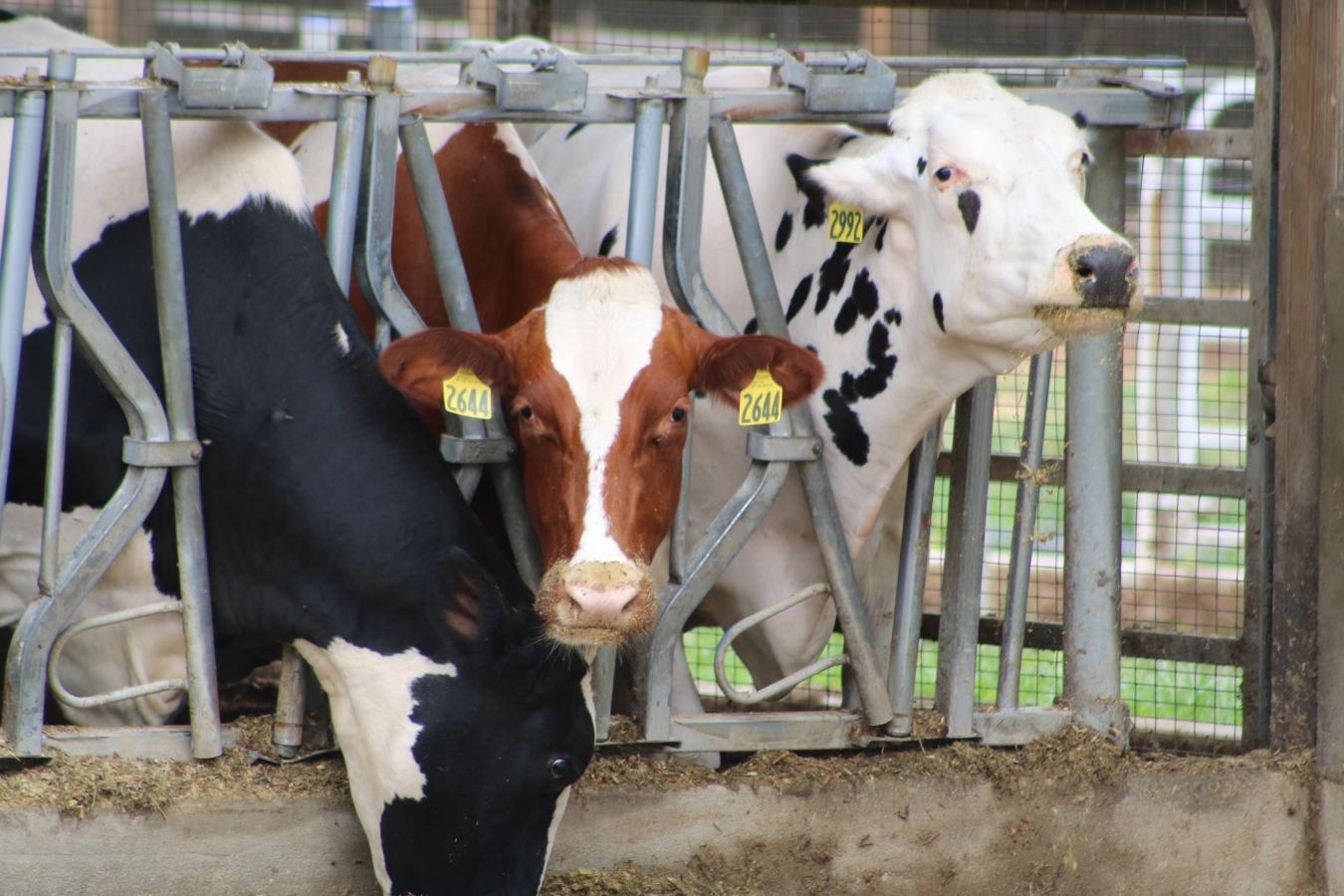
For Ron Holter, water management is one key to thriving amid a changing climate. For him, that has meant building up his soil health over the last 20 years. Holter operates Holterholm dairy farm, which has been operating in Jefferson, Maryland, since 1889.
He has seen firsthand how his management practices have buffered him from the impact of drier conditions and extreme rainfall events. “With dryer summers, I’m needing to buy more hay because my cows are 100% grass-fed; they don’t get grain,” he said. “But the rotational grazing I’ve been doing over the past two decades has made a huge difference in my land and my bottom line.”
In the 1990s, before Holter switched to rotational grazing and regenerative farming methods, dry summers meant his fields were brown and dead. When it rained, water ran off the rolling hillsides. Back then, his family grew Holsteins in a conventional operation, housing his cows in buildings and growing corn to feed them. He switched to rotational grazing in 1996, converting corn fields to pasture, and since then, the organic matter that has built up enables the soil to hold about 40,000 gallons more water per acre. “I’ve now got grass through the dry season,” he said. “It doesn’t grow as tall or fast during extreme dry spells, and I may have to supplement to keep the cows productive, but my pastures are still green.” The additional organic matter also helps keep water from running off during wet seasons.
Holter also finds his cows seem better adapted to weather conditions and more resilient to the climate shifts he sees on the farm. “It hasn’t felt hotter, but the hot spells have been longer. My cows live outside year-round, and we switched from Holstein to Jersey cows, which are smaller, and the heat hasn’t been an issue for them so far.” If increasing temperatures become an issue, Holter said he expects to use adaptive measures such as shade mobiles to move around the fields.
For Maryland to build resilience now and into the future, Holter believes new and young dairy farmers and beef producers should be supported with education and training in proper rotational grazing to help them build the kind of healthy, resilient soils that keep productivity high. “These things are going to really help their bottom line as conditions become more extreme,” he said. “We need to inspire, teach and model how to graze properly, and show that it can be financially and environmentally better.”
Any transition involves costs, and rotational grazing requires labor and infrastructure, such as electric fencing, and adaptation to new practices. Still, Holter said that once these practices are established, farmers can cut their costs dramatically by buying half as much grass. It took Holterholm Farm four or five years to see productivity rise after switching to regenerative practices, but today, he feels his farm is healthier, more productive and more resilient than ever before.
Preserving Farmland and Building Resilience
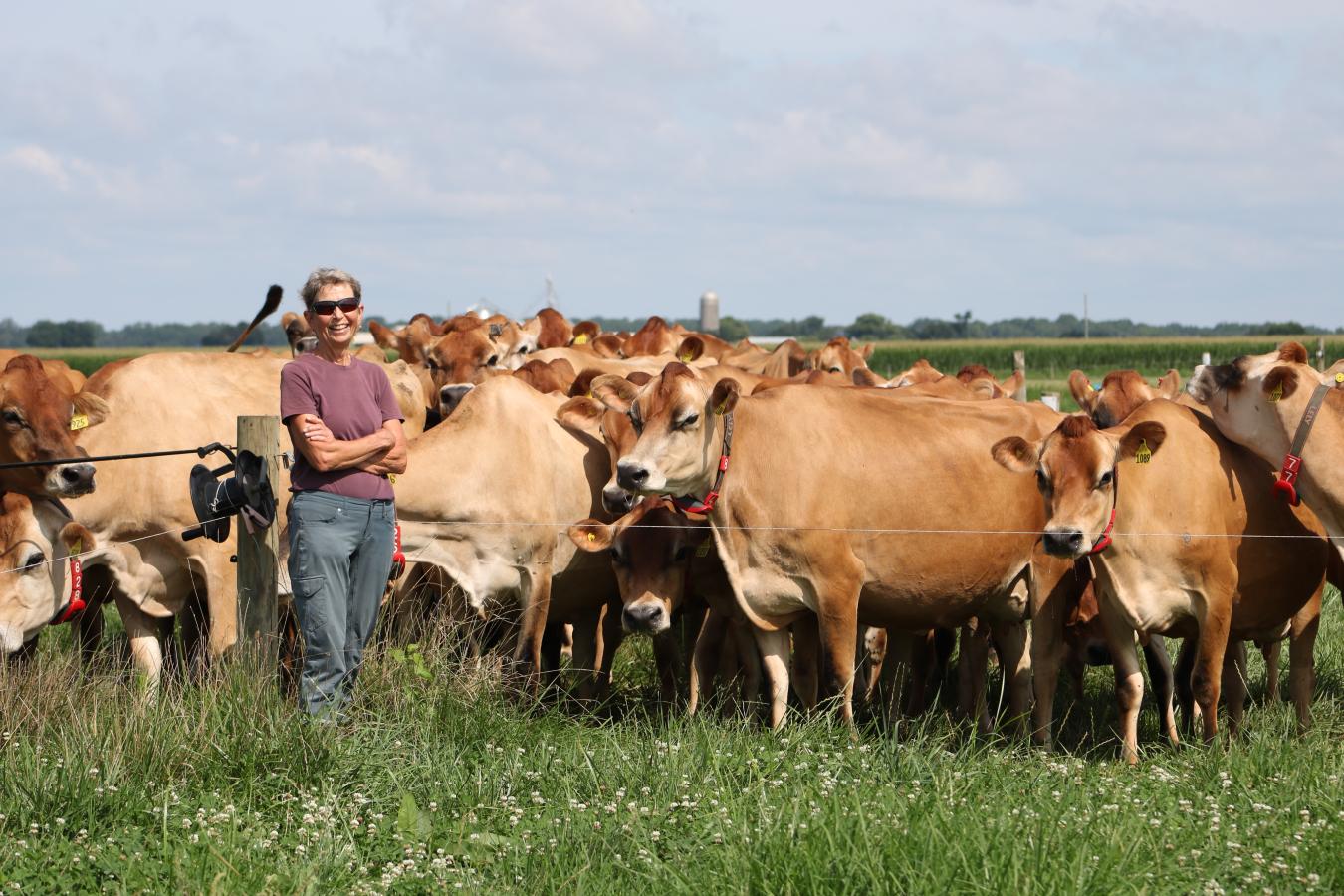
Judy Gifford’s journey began on a small dairy farm in Connecticut, where her love for cows and agriculture was cultivated. After earning degrees in animal science and public administration, she worked for over 16 years in the public sector, starting as a 4-H Agent, then at the National Institutes of Health and finally on Capitol Hill as staff to a member of Congress and then a lobbyist for the National Milk Producers Federation. As fate would have it, Judy met her husband while working part-time on a dairy farm while employed at NIH. When they had the opportunity to purchase a dairy farm, she gladly left the political world behind to realize her lifelong dream. Judy and her husband, Robert Fry, a bovine veterinarian, purchased 62 acres in Kent County on Maryland’s Eastern Shore and established St. Brigid’s Farm, aptly named after the patron saint of dairymaids and scholars.
St. Brigid’s Farm is home to a purebred herd of Jersey cattle, a breed renowned for its sustainability due to their smaller frame and high milk yield. The farm sells its milk through Land O’ Lakes Cooperative, direct markets grass-fed beef and sells surplus breeding animals to farmers from Pennsylvania to Wisconsin. While many dairy farms have scaled up, Gifford has prioritized sustainable practices that are economically viable and ecologically sound.
“I’ve always loved the land. I can’t stand to be indoors, and I just respect nature,” Gifford explains. Her deep connection to the land drives her commitment to preserving Maryland’s agricultural resources, which she believes are threatened by large-scale solar energy projects and data centers, warehouses and distribution centers. “We take our land for granted,” Gifford warns. “Once you put concrete in the ground and compact it under solar panels, that farmland is not coming back.”
As a Kent Conservation and Preservation Alliance Board of Directors member, Gifford emphasizes that Maryland’s fertile land is invaluable. The state’s favorable climate, flat terrain, and proximity to markets make it uniquely positioned to support agriculture, especially as other regions face challenges from climate change. Severe droughts, floods and saltwater intrusion are reducing agricultural productivity in areas like California and the Midwest. Gifford believes the mid-Atlantic could become America's next “breadbasket” if its farmland is preserved.
To mitigate climate challenges, St. Brigid’s Farm employs adaptive grazing, where animals are moved in a manner that best supports the soil food web and plant health. The farm’s best management practices (permanent pastures, minimum tillage, buffer strips, fencing off waterways, planting trees and pollinator habitat) enhance soil and water quality and reduce erosion. Additional sustainable practices include several manure storage facilities managing nutrient levels, and irrigating pastures during droughts. Gifford also stores six months’ worth of feed as a buffer against extreme weather events.
“The weather has always been fickle,” Gifford says. “But it’s getting harder to mitigate, and you need more tools. That’s where reports and research come in—to give farmers the tools to adapt.”
However, Gifford argues that farmers cannot tackle these challenges alone. She highlights the rising cost of land due to solar leasing, which offers significantly higher lease payments per acre than traditional farming. This drives up rental rates, making it difficult for small-scale farmers to compete.
“Farmers are already on the edge most of the time,” Gifford said. “Increasing land costs because of Maryland’s solar preference is really scary. If one farm loses its rental land, it creates a ripple effect, driving up costs for everyone else. The farming economy could collapse under this pressure.”
Gifford fears that short-term profits from solar development could result in long-term consequences for Maryland’s agricultural sector. She calls for a more balanced approach to land use, which values farmland as a critical resource for food security and environmental sustainability.
“Every acre of open space is irreplaceable,” she said. “We need to value farmers, value the land and be cautious of unintended consequences. Once farmland is gone, we can’t get it back.”
Growing Food and the Community with Urban Farming
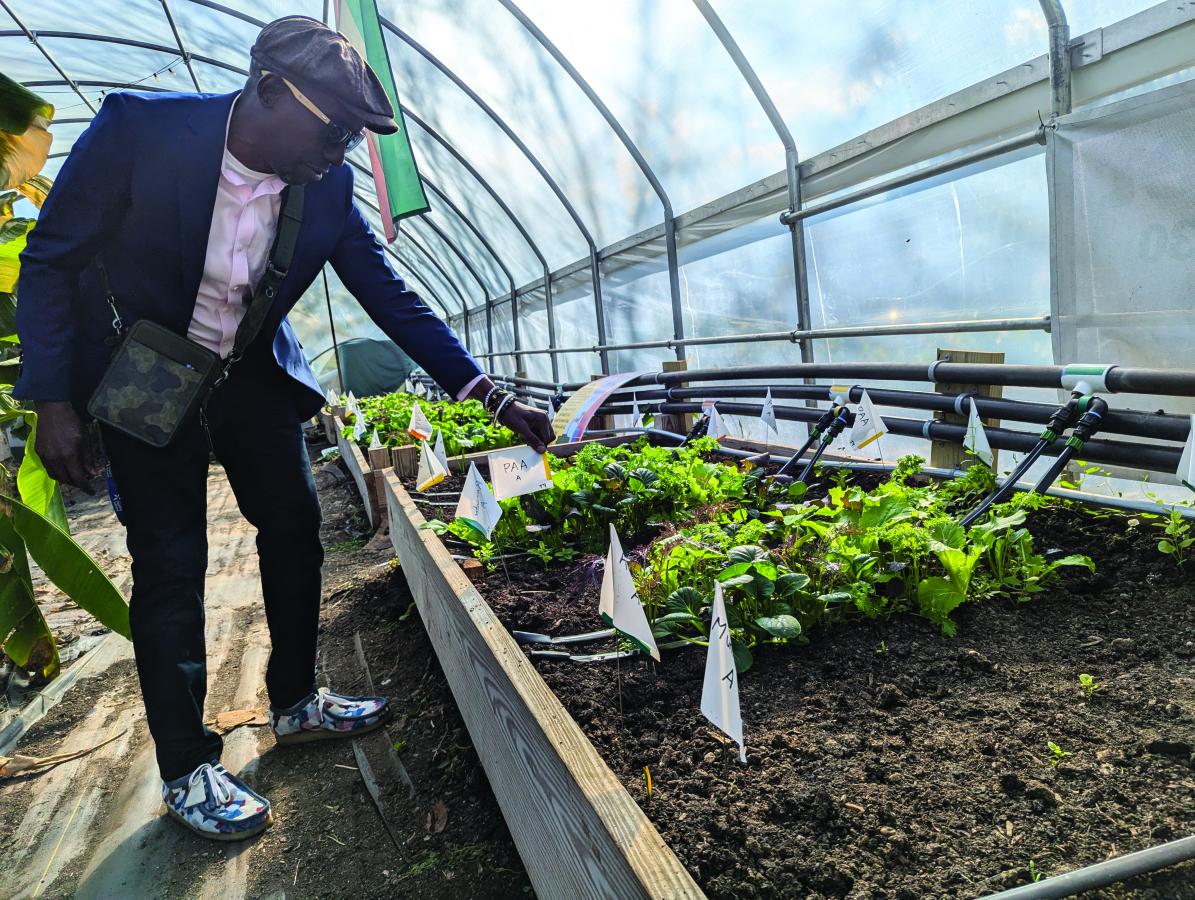
Urban farmers play a critical role in Maryland’s food system. The goals of many of the state’s urban farms are rooted in response to community needs and an endeavor to enable societal growth in areas where access to healthy food is often limited.
For the farmers at Plantation Park Heights Urban Farm, the relationship between providing access to food and improving the community has been visible over the decade the nonprofit farm has been operating.
In 2014, Richard Francis, better known as “Farmer Chippy,” started farming in his home’s yard in the Park Heights area of Baltimore City. Francis is a native of Trinidad and Tobago who, after moving to the U.S., worked as a biomedical field service engineer before landing in his true passion, farming, a profession he’s always wanted to pursue.
In Park Heights, Francis looked around and saw hungry and struggling neighbors, vacant lots that sat unused and communities of people often forgotten in the margins of society regarding education and economic fortitude. As a vegetarian and a man who prefers Caribbean food, with its exotic herbs, peppers, greens and other vegetables that can be hard to find in the U.S., Francis also looked around and saw that others in his neighborhood were having the same issue of not being able to get the food he was accustomed to, nor did they have reasonable access to healthy food in general.
So, he started growing the food he was accustomed to. Then others in the neighborhood wanted some, too, “so we started giving it away,” Francis said.
“We never had the intention to sell the food. I grew up in a community where people care for each other,” he said.
Plantation Park Heights Urban Farm was registered as a nonprofit organization in 2017. Over the years, Francis expanded into the vacant lots near his home. More and more community members wanted food, so in exchange, he gave many of them “jobs” on the farm to volunteer and assist in some of the legwork it takes to grow food. It “gave people ownership” of the farm and helped establish a sense of community in the immediate neighborhood.
The farm focuses its efforts on educating not only the adults in its neighborhood who are unfamiliar with agriculture or farming but also the children of the community, who he hopes will grow and start their own farms, providing another pathway and opportunities for city kids from low-income families to be leaders in their own communities.
“It’s a three-part project—training children, growing food and growing the community,” Francis said. “We want to create an environment that creates work and entrepreneurship opportunities and higher education opportunities for everyone.”
Francis now has a team of farmers and people who help with the farm’s day-to-day operations and long-term management. They often partner with institutions or grant providers to make the nonprofit operation viable. His farm is involved in several university-level studies, from scientific experiments on rainwater harvesting and biochar to pursuing initiatives like a training institute for prospective urban farmers. “As urban dwellers, urban advocates, we must be involved,” he said.