Private Pesticide Licensing Exam
- 6:00 PM - 8:30 PM
In order to use certain restricted pesticides, Maryland law requires residents to be licensed. Residents who want to be licensed, must pass the Maryland Private Pesticide Licensing Exam.
This presentation will examine wild bees generally, illustrating their characteristics, their importance in the food chain, and the challenges they
currently face in this changing world.
As a group, we will discuss recommendations on how to support these key pollinators and how to make your landscapes more bee-friendly.
Residents of Queen Anne’s County are invited to attend an upcoming Solar Visioning Info Session to learn about utility-scale solar development and participate in facilitated discussions.
This session aims to educate the public on regional utility-scale solar development and provide a platform for community dialogue on various aspects of solar projects. The insights gathered from this community conversation will inform local leaders, government officials, and the research team about resident perceptions of solar development. The discussion will help shape the following:
Your participation will help University of Maryland (UMD) Extension and public officials in understanding how to proactively engage communities in planning for solar energy land use. Recognizing that many rural landowners may be approached by developers, our goal is to enhance the solar siting process by incorporating the voices and priorities of local and county government and community members. A summary report will be provided to all participants later in the summer.
This event is organized in partnership with Queen Anne’s County Government, MDA’s Maryland Agricultural Conflict Resolution Service, UMD’s Agriculture Law and Education Initiative, and UMD Extension. UMD Extension provides Maryland residents with the highest quality of public service, distinguished educational programming, and cutting-edge research through the dissemination of unbiased research-based educational information. The upcoming Solar Visioning Info Session is free to attend, but registration is required. For more information and to register, visit go.umd.edu/QASolar. Register by August 12, 2024 to secure a dinner meal and to receive a gift valued at $25 when you attend the meeting. We look forward to your participation in this important community event.
For more information, or if you need a reasonable accommodation to participate, please contact Drew Schiavone (dschiavo@umd.edu; 301-432-2767).
Residents of Queen Anne’s County are invited to attend an upcoming Solar Visioning Info Session to learn about utility-scale solar development and participate in facilitated discussions. This session aims to educate the public on regional utility-scale solar development and provide a platform for community dialogue on various aspects of solar projects. The insights gathered from this community conversation will inform local leaders, government officials, and the research team about resident perceptions of solar development. The discussion will help shape the following:
• Community vision
• Comprehensive planning, including solar overlay maps
• Strategies for landowners to negotiate with solar developers
• Strategies for communities to negotiate with solar developers.
Your participation will help University of Maryland (UMD) Extension and public officials in understanding how to proactively engage communities in planning for solar energy land use.
Recognizing that many rural landowners may be approached by developers, our goal is to enhance the solar siting process by incorporating the voices and priorities of local and county
government and community members. A summary report will be provided to all participants later in the summer.
This event is organized in partnership with Queen Anne’s County Government, MDA’s Maryland Agricultural Conflict Resolution Service, UMD’s Agriculture Law and Education Initiative, and
UMD Extension. UMD Extension provides Maryland residents with the highest quality of public service, distinguished educational programming, and cutting-edge research through the
dissemination of unbiased research-based educational information. The upcoming Solar Visioning Info Session is free to attend, but registration is required. For more information and
to register, visit go.umd.edu/QASolar. Register by August 12, 2024 to secure a dinner meal and to receive a gift valued at $25 when you attend the meeting. We look forward to your
participation in this important community event. For more information, or if you need a reasonable accommodation to participate, please contact Drew Schiavone (dschiavo@umd.edu; 301-226-7581).
This one-day event convenes digital inclusion leaders, practitioners, and advocates from across the state to discuss critical issues, share best practices, and collaborate on solutions for bridging the digital divide in Maryland. This year's event will offer a dynamic lineup of speakers and panel discussions, with ample networking opportunities. A special Maryland Digital Equity Awards Ceremony will also be held to recognize individuals and organizations leading the charge for digital equity in Maryland.
The first inaugural conference of its kind, the 2024 Cultivating Innovation in Maryland's Agriculture and Technology Conference has been designed to empower farmers and other agriculture industry stakeholders by providing in-depth knowledge of the latest and most promising technologies transforming the agricultural sector. By embracing cutting-edge agriculture technologies, farmers can significantly boost yields, enhance efficiency, and ultimately achieve greater profitability.
Cultivating Next-Gen Agritech Innovation with a Wide Selection of Conference Topics
The conference agenda boasts a diverse range of topics, including:
- Introduction to Technology: Gain a foundational understanding of the role technology is playing in modern agriculture practices when it comes to streamlining operations and improving productivity
-Uses and Applicability: Learn about the practical applications of technology across various farming and agriculture sectors.
-Data Management & Analytics: Discover best practices and explore the ways data is being used to improve crop yields and efficiency for a more sustainable and profitable future.
-Resource Management: Learn how drones, GIS, water management, precision farming, yield monitors, and other tech are being used successfully.
-Current Implementations: Hear first-hand experiences from early adopters who are already utilizing these hardware and software technologies in their fields.
-Future Outlook: Get a glimpse into the exciting future of agriculture technology, with insights into upcoming innovations and advancements expected in the next 3-5 years.
This conference is ideal for farmers from all sectors of agriculture, agriculture-related companies, University of Maryland Extension faculty, and USDA and other government agency workers.
Don't miss this opportunity to connect with fellow farmers, industry professionals, and experts in the field. Together, let's cultivate innovation and drive Maryland's agriculture sector toward a more technologically advanced and prosperous future.
Mark your calendar and start planning your garden now! Winners receive prizes and bragging rights! This event will include:
Taste testing different tomato varieties
Demonstrations and interactive displays
Celebration of tomatoes!
Categories judged:
Largest (size and weight)
Ugliest (misshapen)
Best tasting
Cherry (10)
FREE to participate.
If you need reasonable accommodation to participate in any event or activity, please contact the University of Maryland Extension at 301-334-6960 by Aug. 1, 2024.
Master Gardener volunteers will hold a table in the lobby of the Easton branch of the Talbot County Free Library to help answer garden/landscape-related questions; volunteers will also have give-aways, publications, and other resources to help you get growing this fall.
You can find us from 4-6pm on Thursdays, September 12th and October 10th. Feel free to bring in plant or insect samples!
Event: Pasture Walk at Western Maryland Research and Education Center
Date: July 23, 2024 | Tuesday
Time: 6:00 p.m. to 8:30 p.m.
Location: 18330 Keedysville Rd., Keedysville, MD 21756 | Cost: Free
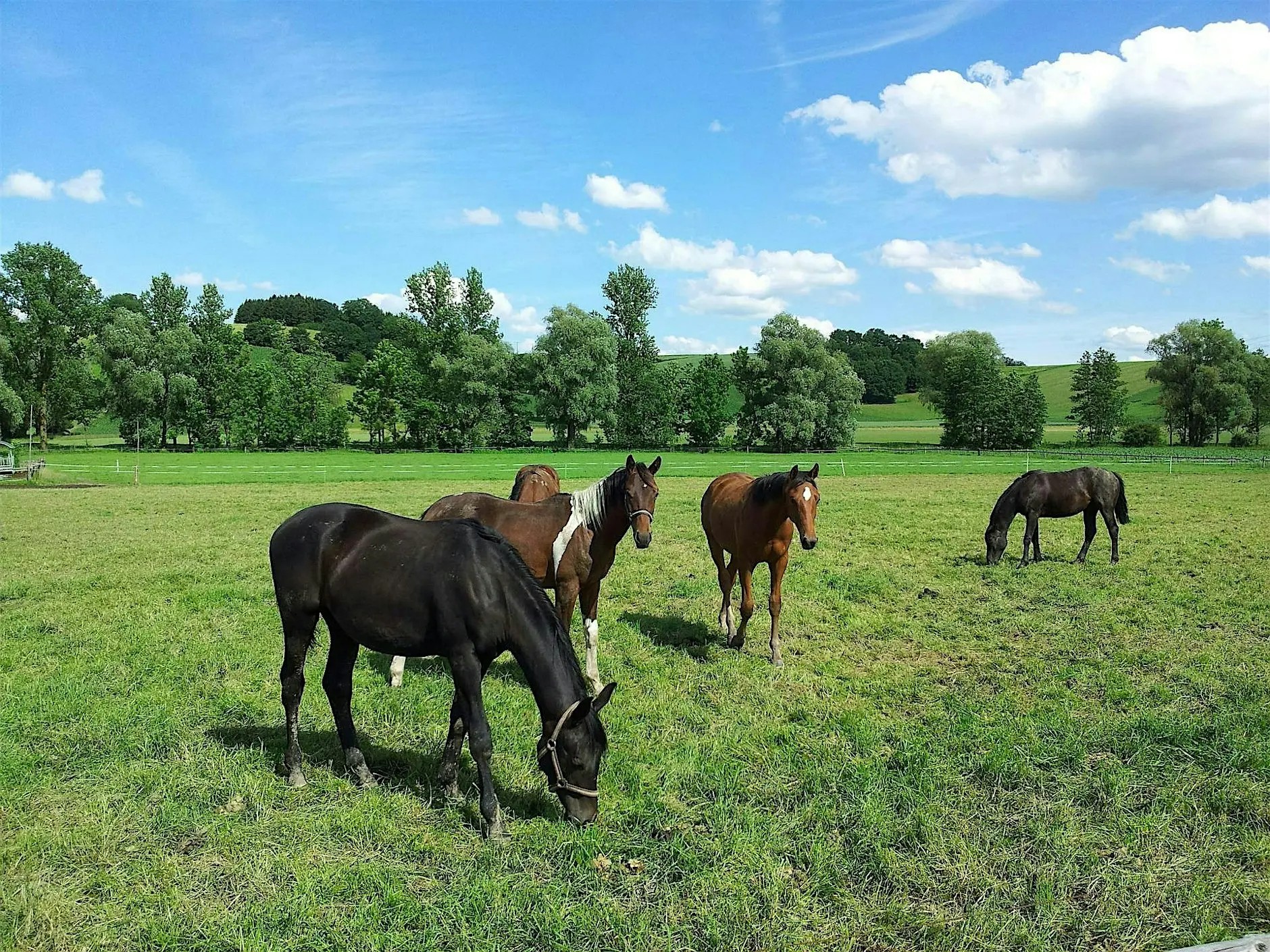
Description: Join University of Maryland Extension and NRCS for an educational pasture walk at the University of Maryland Western Maryland Research and Education Center in Keedysville, MD (Washington county).
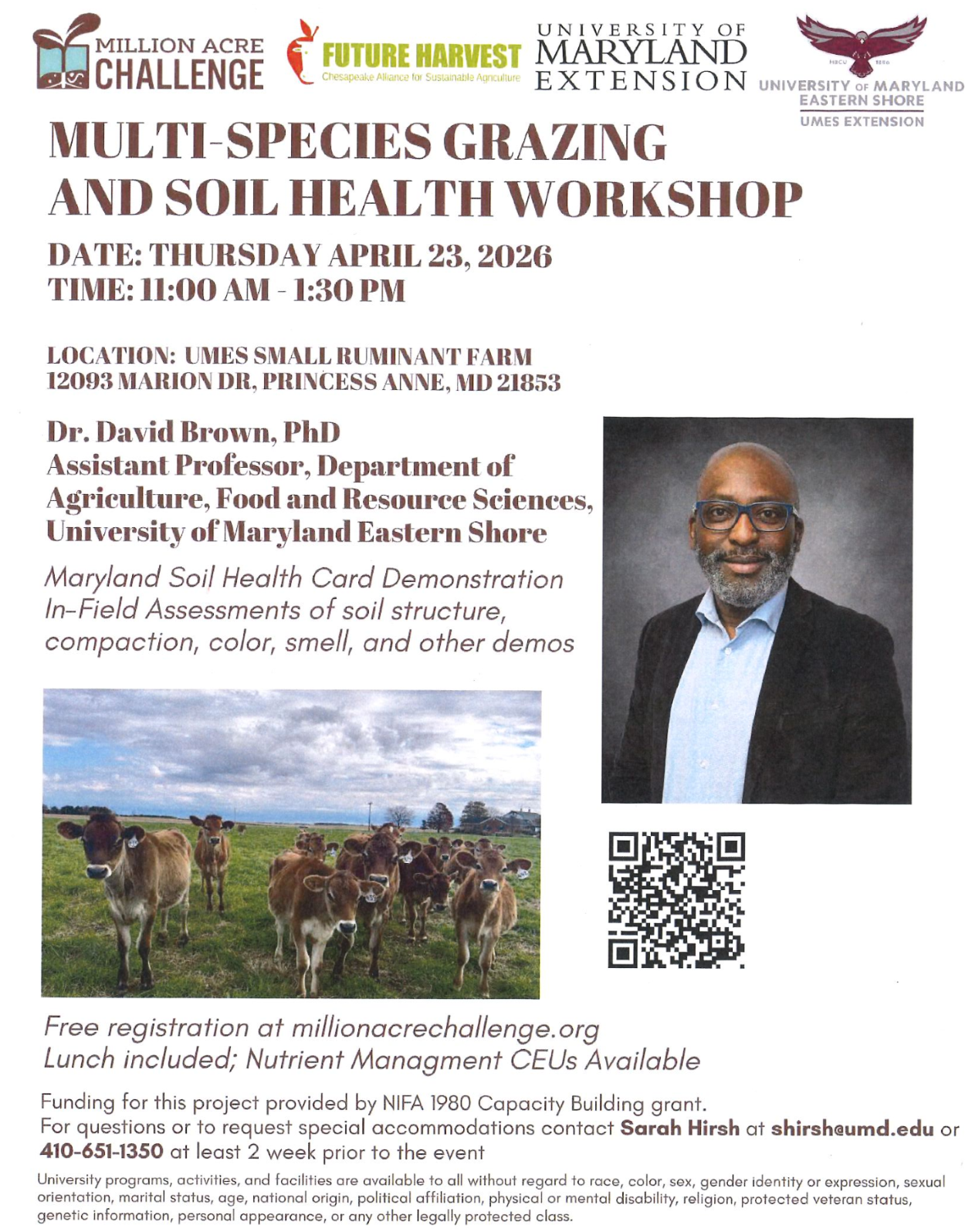
Extension educators are working on an ongoing mixed-species grazing management study utilizing annual forages as a means to extend the grazing season and will discuss grazing and parasite management, mixed-species grazing, and strategies for working annual forages into a pasture system. A variety of warm-season annual mixtures have been established at the reserach station, discussion will also include options for annual mixtures and pros/cons for a variety of annual forage species and mixtures.
Sponsored by University of Maryland Extension and NE SARE
University of Maryland Extension programs, activities, and facilities are available to all without regard to race, color, sex, gender identity or expression, sexual orientation, marital status, age, national origin, political affiliation, physical or mental disability, religion, protected veteran status, genetic information, personal appearance, or any other legally protected class. If you need reasonable accommodation to participate in any event or activity please contact us at least 2 weeks prior to the event.

Registration: https://go.umd.edu/pw-July
Saltwater intrusion represents one of the foremost challenges related to climate change facing farmers in coastal communities in the Mid-Atlantic region. SALT, a two-day conference focused on saltwater intrusion and sea level rise in coastal agroecosystems, will be held June 11 and 12, 2024, at the Hyatt Regency in Cambridge, Md., and hopes to address what is happening in academics and on the ground to face it.
SALT stands for “Salinity-Affected Lands in Transition.” The conference will feature expert speakers discussing saltwater intrusion and sea level rise, case studies of areas across the country and hemisphere, environmental justice, coastal farming, ghost forests, adaptation solutions and mitigation strategies.
“The SALT Conference will bring together practitioners, policy-makers, and scientists to discuss issues related to sea-level rise and saltwater intrusion across the Eastern Seaboard of the U.S. I am excited to share some of our lessons learned from projects in Maryland, Delaware, and Virginia (funded by USDA-NIFA, NFWF, and the NSF) and learn from others who are facing similar challenges across the U.S. and the world,” said Dr. Kate Tully, a University of Maryland College of Agriculture and Natural Resources researcher investigating saltwater intrusion on the Delmarva Peninsula. “The SALT conference will provide a platform for information sharing, partnership building, and networking. I'm hoping for a great turnout.”
This conference highlights research being conducted by the University of Maryland (UMD) Agroecology Lab, the University of Delaware (UD) and George Washington University (GWU) on the Delmarva Peninsula, which comprises the coastal areas of Maryland, Delaware and Virginia. The partners have been researching the extent and economic impact of saltwater intrusion in the region and developing potential mitigation strategies for land affected by saltwater intrusion. The Harry R. Hughes Center for Agro-Ecology has been partnering with researchers from these institutions on outreach and stakeholder engagement for the project.
This research and conference are supported by grants from the National Fish & Wildlife Foundation, the U.S. Department of Agriculture National Institute of Food and Agriculture, and the National Science Foundation. People can register for the conference online at go.umd.edu/SALT. Registration is open until June 3, 2024.
This conference is complemented by a podcast series called Delmarva’s Invisible Flood. The three-episode series features conversations with the researchers at UMD, UD and GWU who are working on the ground to test and implement mitigation strategies, map saltwater intrusion’s extent, and deduce its impact on society. The podcast series can be found at hughescenter.podbean.com.