Expertise
- Wildlife Ecology
- Environmental Toxicology
- Population Ecology
- One Health
- Water Quality and Quantity
Education
- Western Michigan University, 1985, B.A. Biology
- Northern Michigan University, 1991, M.A. Biology. Thesis: Factors Affecting Bald Eagle Reproduction in Upper Michigan
- Michigan State University, 1993, Ph.D. Fisheries and Wildlife – Environmental Toxicology. Dissertation: Regulation of Bald Eagle (Haliaeetus leucocephalus) Productivity in the Great Lakes Basin: An Ecological and Toxicological Approach
Professional Overview:
- Birds are sensitive indicators of the health of the environment
- They indicate impacts from habitat degradation, pollutants, zoonotic diseases, human impacts and global climate change
- Impacts are to individuals, ecosystems, and populations
I have been studying birds of prey, with a focus on the bald eagle since 1984. I specialize in the study of how stressors affect wildlife populations including environmental contaminants effects, the effects of human activities, foraging ecology, and habitat relationships. The work of my group has studied species across the world with projects in North America, South America, Europe, Asia, and Africa.
Discover the Upper Peninsula, 7/21/25. Outdoor program featuring bald eagle banding program.
Professional Experience:
- 1993-1994 Post-Doctoral Research Associate, Michigan State University
- 1994-1995 Principal and Chief Scientist, Eagle Environmental, Inc., Haslett, Michigan
- 1996-1999 Director, Gale Gleason Environmental Institute, Lake Superior State University
- 1999-2003 Assistant Professor, Department of Environmental Toxicology, Clemson University
- 2003-2004 Assistant Professor, Department of Forestry & Natural Resources, Clemson University
- 2004-2008 Associate Professor, Department of Forestry & Natural Resources, Clemson University
- 2008-2011 Professor, Department of Forestry & Natural Resources, Clemson University
- 2011-2023 Chair, Department of Environmental Science & Technology, University of Maryland
- 2011- Professor, Department of Environmental Science & Technology, University of Maryland
Professional Work:
Offices, Committees, and Professional Organizations (at UMD):
National Academies of Science, Medicine, and Engineering
- Member, Standing Committee on the Care and Use of Animals in Research, 2021-
- Moderator, Workshop: Discussing and Understanding Animal Welfare Challenges in Research and Education on Wildlife, Non-Model Species and Biodiversity, 2022
American Association for the Advancement of Science
- 2024 - 2025. Charles Valentine Riley Memorial Lecture Committee, Committee Member.
- 2023 - 2025. Section O Agriculture, Food, and Renewable Resources, Committee Member.
Ornithological Council
- Member, Representing the Raptor Research Foundation, 2018-25
- Vice-Chair, 2019-22
- Chair, 2022-25
Society for Environmental Toxicology and Chemistry
- Science Committee, SETAC North America, 2013-2020
International Activities:
International Joint Commission, United States and Canada
- United States Co-Chair, Great Lakes Science Advisory Board, 2011-2014
- Member, Great Lakes Science Advisory Board, 1996-2014
- Expert, Selection of Indicators for the Great Lakes Water Quality Agreement, Windsor, Ontario, 2013
- Expert and Convenor, Wildlife Indicators for the GLWQA, Burlington, Ontario, 2014
Science and Engineering Research Canada
- External Referee, Senior Canada Research Chair Grants, 2005, 2014
- External Referee, Alliance Grants, 2020
St. Mary’s River Binational Public Advisory Committee
- Member, 1997-1999
Environment Canada
- Expert, Setting Goals for Delisting the Detroit River Area of Concern, 2007
Lake Erie Lakewide Management Plan (LaMP)
- Member, Working Group on Wildlife Effects and Monitoring, 1996-2001
University-level Service:
College of Agriculture & Natural Resources, University of Maryland
- Chair, Search Committee, Department Chair, Animal & Avian Sciences, 2014
- Chair, Search Committee, Assistant Director, Natural Resources & Sea Grant, 2014
University Committees, University of Maryland, College Park
- Council on the Environment, 2012-2015
- The Honor Society of Phi Kappa Phi, President, 2012-2022
System Committee, University of Maryland System
- Curriculum Restructuring Committee, Marine, Estuary, and Environmental Sciences, 2013-2015
Academics and Mentoring:
Master’s Degree (Major Professor, at UMD):
2011. Katherine Leith. M.S., Wildlife and Fisheries Biology (non-thesis), Clemson University.
2012. Carly Summers. “Lead and cadmium in seabirds of South Africa”. M.S., Wildlife and Fisheries Biology, Clemson University.
2012. Peter Datema. “Using bald eagles to monitor hydroelectric projects license requirements along the Au Sable, Manistee, and Muskegon rivers, Michigan”. M.S., Wildlife and Fisheries Biology, Clemson University.
2012. Eric Reson. “Assessing Maasai attitudes and perceptions toward vultures: A case study of resident Maasai around Maasai Mara National Reserve, Kenya”. M.S., Wildlife and Fisheries Biology, Clemson University.
2014. Kendall Simon. “Bald eagle (Haliaeetus leucocephalus) population productivity and density dependent effects in Michigan, 1961-2010”.M.S., Environmental Science and Technology, University of Maryland.
2016. Brent West. "Estimating population trends in American woodcock (Scolopax minor) using population reconstruction models". M.S., Environmental Science and Technology, University of Maryland.
2016. Anthony Waldorp. Masters in Sustainable Development and Conservation Biology (non-thesis), University of Maryland.
2018. Rachel Eberius. "Biomonitoring organochlorine compounds using bald eagles (Halieaeetus leucocephalus) in Voyageurs National Park 2011-2017 and developing new biomonitoring techniques". M.S., Environmental Science and Technology, University of Maryland.
Doctoral Degree (All as Major Professor, 1 as Co-Advisor, at UMD):
2012. Stephan Irwin. "Mass Latex Balloons Releases and the Potential Effects on Wildlife". Ph.D., Wildlife and Fisheries Biology, Clemson University.
2013. Latice Fuentes. "Long-Term Bald Eagle Monitoring: Assessing Emerging Risks to the Great Lakes Ecosystem by Evaluating Impacts on Tertiary Predators". Ph.D., Wildlife and Fisheries Biology, Clemson University.
2014. Katherine Leith. "Applied Statistics in Environmental Monitoring: Case Studies and Analysis for the Michigan Bald Eagle Biosentinel Program". Ph.D., Wildlife and Fisheries Biology, Clemson University.
2016. Lindsay Hill. "Investigation into the ecological and toxicological constraints on a population of lesser flamingos (Phoeniconaias minor) at Kamfers Dam in Kimberley, South Africa". Ph.D., Wildlife and Fisheries Biology, Clemson University.
2016. Kendall Simon. "Bald eagles (Haliaeetus leucocephalus) as indicators of Great Lakes Ecosystem Health". Ph.D., Environmental Science & Technology, University of Maryland.
2016. Patrice Nielsen. "Secretive marshbirds in urban wetlands in the Washington DC Metropolitan area". Co-advised with Andrew Baldwin, Ph.D., Environmental Science & Technology, University of Maryland.
Post-Doctoral Research Associates (Director) at UMD:
Latice Fuentes, Ph.D., University of Maryland, 2013-2015
H. Tyler Pittman, Ph.D., University of Maryland, 2014-2015
Thomas Bean, D.Phil., University of Maryland, 2015-2018
Meredith Barton-Bohannon, Ph.D., University of Maryland, 2016-2019
Mentoring While at UMD:
Bharathiar University, Coimbatore, Tamil-Nadu, India, External Reviewer for Ph.D. Degree
- 2012, P. Jayanthi, "Organochlorine pesticide residues in the marine fishes of Coimbatore Market–suitability for human consumption"
- 2013, S. Jayakumar, "Organochlorine pesticides, population and reproductive success of fish-eating birds in select heronries of Tamil Nadu"
- 2014, K. Ganesan, "Pesticide residues in select components of an agroecosystem adopting organic and conventional farming in Padayetti Village, Palakkad District, Kerala"
- 2020, M. Devarajan, "Polycyclic aromatic hydrocarbon contamination in Pallikaranai Wetland, Tamil Nadu, India; Fish as an indicator"
University of Cape Town, South Africa, External Reviewer for Ph.D. Degree
- 2018, R.A. Garbett, "Conservation of raptors and vultures in Botswana: with a focus on lappet-faced vultures Torgos tracheliotos"
- 2024, K. Padayachee, “A Multi-Scale Analysis of Organochlorine Pesticide Contamination in Raptor Populations: Research Effort, Historical Trends, and Current Levels”
University of Kwazulu-Natal, South Africa, External Reviewer for M.Sc. Degree
- 2025, K. Govender, “Presence and Persistence of the Peregrine Falcon and Lanner Falcon in South Africa”
Murdoch University, Perth, Western Australia, External Reviewer for Ph.D. Degree
- 2025, S.C. Cherriman, “Movement Ecology of Australia’s Avian Apex Predator: The Waalitj/Warlawurru (Wedge-tailed Eagle Aquila audax)”
Research Overview:
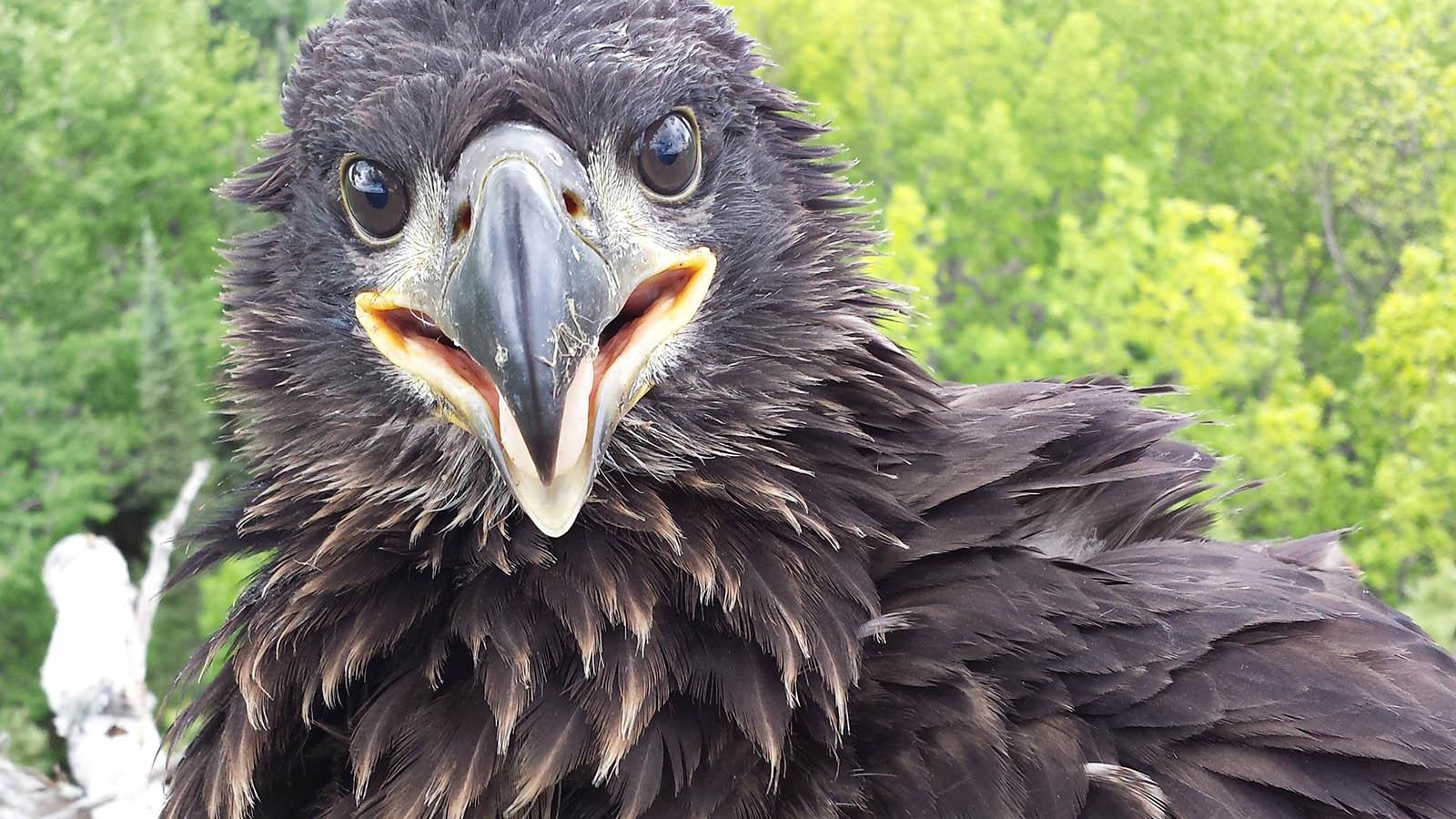
My lab utilizes the bald eagle (Haliaeetus leucocephalus) and other avian predators to indicate the health of the environment. The bald eagle population in Michigan has undergone a significant recovery following the ban of the pesticide DDT and other biocides by the U.S. Environmental Protection Agency in the 1970’s. Population productivity and recovery however, have been uneven throughout the state of Michigan because of the higher load and persistence of contaminants in specific regions. Bald eagles are top predators with a mainly fish diet, making them an ideal sentinel species to assess contaminant levels in the Great Lakes Basin. Because of the tendency of organochlorine chemicals to bioaccumulate in the fat of fishes, bald eagles have been regarded as a key wildlife sentinel species within the Great Lakes. We use health indicators to understand the success of the remediation of pollutants at key Michigan Areas of Concern funded by the Great Lakes Restoration Initiative. A recent impact to the bald eagles of the Great Lakes region include a large mortality event attributed to bird flu (highly pathogenic avian influenza). My research uses 65 years of bald eagle productivity and contaminant data to determine localized, watershed-level, as well as population level, effects caused by organochlorines and heavy metals. Eagles nesting within 8.0 km of the Great Lakes shorelines have greater PCB and p,p'-DDE concentrations, and decreased productivity rates than those nesting in more interior regions. Contaminated adults that originated from these areas may contribute to a decreased rate of recovery because of their inability to reproduce at sufficient levels to support a healthy population. Through our research, I also determine sink/ source effects and morphometric differences in nestlings between these spatial regions. We have used the lessons learned in our study to work across the planet with other researchers to monitor the health of the planet.
Awards & Honors:
Select Honors since 2011
- Distinguished Alumni Award, Northern Michigan University, 2012
- Elder of the Maasai, 2012
- Bald Eagle Person of the Year, Eagle Nature Foundation, 2014
- Alumni Achievement Award, College of Arts & Sciences, Western Michigan University, 2016
- National Eagle Scout Association Outstanding Eagle Scout Award, 2019
- National Fellow, The Explorers Club, 2019
- Distinguished Conservationist, Lifetime Contributions to Conservation on a National and International Level, Scouting America, 2020
- Elected Member, The Cosmos Club, 2021
- Fellow, American Association for the Advancement of Science, 2021
- Lowell Thomas Award, The Explorers Club, Theme: The Innovators, 2023
- “50 Scouts You Should Know”, 50th Anniversary, Bay Lakes Council, BSA, 2023
- Mary Todd Sabbatical Award (inaugural award), The Honor Society of Phi Kappa Phi, 2023
- Fulbright Senior Specialist, U.S. Department of State, 2023
- Dean Gordon Cairns Award for Distinguished Creative Work and Teaching in Agriculture, College of Agriculture and Natural Resources, University of Maryland, 2024
Publications:
Selected Publications:
98 book chapters and journal publications total; most recent listed
- Pittman, H.T., W.W. Bowerman*, L.H. Grim, T.G. Grubb, W.C. Bridges. 2011. Using Nestling Feathers to Assess Spatial and Temporal Trends of Hg in Bald Eagles, at Voyageurs National Park, Minnesota, USA. Ecotoxicology 20:1626-1635
- Shrum, P.L.*, W.W. Bowerman, D.G. Olaechea, R. Amable. 2011. More records of sympatry of black-faced hawk (Leucopternis melanops) and white-browed hawk (L. kuhli) in Madre De Dios, Peru. Journal of Raptor Research 45:104-105
- Fuentes, L., L.J. Moore, J.H. Rodgers, Jr.*, W.W. Bowerman, G.K. Yarrow, W.Y Chao. 2011. Comparative toxicity of two glyphosate formulations (Original Formulation of Roundup® and Roundup Weathermax®) to six North American larval anurans. Environmental Toxicology and Chemistry 30:2756-2761
- Moore, L.J., L. Fuentes, J.H. Rodgers, Jr.*, W.W. Bowerman, G.K. Yarrow, W.Y Chao. 2012. Relative toxicity of the components of the Original Formulation of Roundup® to five North American anurans. Ecotoxicology and Environmental Safety 78:128-133
- Turyk M.E., S.P. Bhavsar, W. Bowerman, E. Boysen, M. Clark, M. Diamond, D. Mergler, P. Pantazopoulos S., Schantz, D.O. Carpenter*. 2012. Risks and Benefits of Consumption of Great Lakes Fish. Environmental Health Perspectives 120:11-18
- Hill, LM, WW Bowerman*, JC Roos, WC Bridges, MD Anderson. 2013. Effects of water quality changes on the phytoplankton and lesser flamingo (Phoeniconaias minor) populations at Kamfers Dam, a Saline Wetland, in Kimberley South Africa. African Journal of Aquatic Science 38(3):287-294
- Haynie R.S., W.W. Bowerman*, S.K. Williams, J.R. Morrison, J.M. Grizzle, J.M. Fischer, S.B. Wilde. 2013. Triploid Grass Carp Susceptibility and Potential for Disease Transfer when used to Control Aquatic Vegetation in Reservoirs with Avian Vacuolar Myelinopathy. Journal of Aquatic Animal Health 25(4): 252-259
- Fuentes, L., L.J. Moore, J.R. Rodgers*, W.W. Bowerman, G. Yarrow, W. Chao. 2014. Role of sediments in modifying the toxicity of two Roundup® formulations to six species of larval Anurans. Environmental Toxicology and Chemistry 33(11):2616-2620
- Summers, C.F., W.W. Bowerman, N. Parsons*, W.Y. Chao, W.C. Bridges, Jr. 2014. Lead and cadmium in the blood of nine species of seabirds, Marion Island, South Africa. Bulletin of Environmental Contamination and Toxicology 93:417-422
- Pittman, H.T., W.W. Bowerman*, L.H. Grim, T.G. Grubb, W.C. Bridges, M.R. Wierda. 2015. Using nestling plasma to assess long-term spatial and temporal concentrations of organochlorine compounds in bald eagles within Voyageurs National Park, Minnesota, USA. Chemosphere 123:79-86
- Su, G., R.J. Letcher, J.N. Moore, L.L. Williams*, P.A. Martin, S.R. de Solla, W.W. Bowerman. 2015. Spatial and temporal comparisons of legacy and emerging flame retardants in herring gull eggs from colonies spanning the Laurentian Great Lakes of Canada and United States. Environmental Research 142:720-730
- Letcher, R.J., G. Su, J.N. Moore, L.L. Williams*, P.A. Martin, S.R. de Solla, W.W. Bowerman. 2015. Perfluoranted sulfonate and carboxylate compounds and precursors in herring gull eggs from across the Laurentian Great Lakes of North America: Temporal and recent spatial comparisons from exposure implications. Science of the Total Environment 538:468-477
- Windels*, S.K., H.T. Pittman, T.G. Grubb, L.H. Grim, and W.W. Bowerman. 2016. Bald eagle predation on double-crested cormorant and herring gull eggs. Journal of Raptor Research 50:230-231
- Wierda, M.R., K.F. Leith, A.S. Roe, T.G. Grubb, J.G. Sikarskie, D.A. Best, H.T. Pittman, L. Fuentes, K.L. Simon, W.W. Bowerman*. 2016. Using bald eagles to track spatial (1999-2008) and temporal (1987-1992, 1999-2003, and 2004-2008) trends of contaminants in Michigan’s aquatic ecosystems. Environmental Toxicology and Chemistry 35:1995-2002
- Bean, T.G., B.A. Rattner*, R.S. Lazarus, D.D. Day, S.R. Burket, B.W. Brooks, S.P. Haddad, W.W. Bowerman. 2018. Phamaceuticals in water, fish and osprey nestlings in Delaware River and Bay. Environmental Pollution 232:533-545
- Guo, J., K. Simon, K. Romanak, W. Bowerman, M. Venier*. 2018. Accumulation of flame retardants in paired eggs and plasma of bald eagles. Environmental Pollution 237:499-507
- Stubbings, W.A., K. Romanak, K. Simon, W. Bowerman, M. Venier*. 2018. Flame retardant metabolites in addled bald eagle eggs from the Great Lakes region. Environmental Science and Technology Letters 5: 354-359
- Simon, K.L., D.A. Best, J.G. Sikarskie*, H.T. Pittman, W.W. Bowerman, T.M. Cooley, S. Stolz. 2020. Sources of mortality in bald eagles in Michigan, 1986-2017. Journal of Wildlife Management 84: 553-561
- Wu, Y., Simon, K.L., Best, D.A., Bowerman, W., Venier, M*. 2020. Novel and legacy per- and polyfluoroalkyl substances in bald eagle eggs from the Great Lakes region, Environmental Pollution 260: 113811, https://doi.org/10.1016/j.envpol.2019.113811
- Gore, M.L.*, A. Hübshle, A.J. Botha, B.M. Coverdale, R. Garbett, R.M. Harrell, S. Krüger, J.M. Mullinax, L.J. Olson, M.A. Ottinger, H. Smit Robinson, L.J. Shaffer, L.J. Thompson, L. van den Heever, W.W. Bowerman. 2020. A conservation criminology-based desk assessment of vulture poisoning in the Great Limpopo Transfrontier Conservation Area. Global Ecology and Conservation. V23: Sep 2020. https://doi.org/10.1016/j.gecco.2020.e01076
- Mora, M.A.*, S.A. Heath, M. Bohannon, W. Bowerman. 2020. Organochlorine pesticides and Polychlorinated Biphenyls in American Oystercatchers Nesting along the Texas Gulf Coast. Waterbirds 43:292-298
- Ottinger, M.A., A. Botha*, W. Bowerman. 2021. Global challenges to sustaining vulture and condor populations. Journal of Raptor Research 55:295-296
- van den Heever, L.*, L.J. Thompson, W.W. Bowerman, H. Smit-Robinson, L.J. Shaffer, R.M. Harrell, M.A. Ottinger. 2021. Reviewing the role of vultures at the human-wildlife-livestock disease Interface: An African perspective. Journal of Raptor Research 55:311-327
- Yee, N., L.J. Shaffer, M.L. Gore, W.W. Bowerman, and R.M. Harrell*. 2021. Expert perceptions of conflicts in African vulture conservation: Implications for overcoming ethical decision-making dilemmas. Journal of Raptor Research 55:328-339
- Ottinger M.A.*, Botha A., Buij R., Coverdale B., Gore M.L., Harrell R.M., Hassell J., Druger S., McClure C.J.W., Mullinax J.M., Shaffer L.J., Smit-Robinson H., Thompson L., van den Heever L., Bowerman W.W. 2021. A strategy for conserving old world vulture populations in the framework of One Health. Journal of Raptor Research 55:374-387
- Thompson, L.J., S.C. Krüger, B.M. Coverdale, L.J. Shaffer, M.A. Ottinger, J.P. Davies, C. Daboné, M. Kibuule, I. Cherkaoui, R. Garbett, W.L. Phipps, E.R. Buechley, A.G. Ruiz, M. Lecoq, C. Camerio, R.M. Harrell, M.L. Gore, and W.W. Bowerman*. 2021. Assessing African vultures as biomonitors and umbrella species. Frontiers in Conservation Science 2: https://doi.org/10.3389/fcosc.2021.729025
- Krüger, S.*, A. Botha, W. Bowerman, B. Coverdale, M.L. Gore, L. van den Heever, L.J. Shaffer, H. Smit-Robinson, L.J. Thompson, M.A. Ottinger. 2022. Old World vultures reflect effects of environmental pollutants through human encroachment. Critical Review: Special Issue "Emerging Contaminants in Developing Countries", Environmental Toxicology and Chemistry 41(7):1586-1603
- Shaffer, L.J.*, J.G. Hurst, S. Johnston, T. Barron, W.W. Bowerman, S. Krüger, L.J. Thompson, M.A. Ottinger. 2022. Urban nesting of black vultures in Houston, Texas, USA. Urban Naturalist Notes 9:1-6
- Bowerman, W.W. 2024. The Bald Eagle: The Improbable Journey of America’s Bird. Invited Book Review, Ornithological Applications 126: 1-2
- Hammond, M.P., S.R. de Solla*, K.D. Hughes, M.E.B. Bohannon, K.G. Drouillard, G.C. Barrett, and W.W. Bowerman. 2024. Legacy contaminant trends in the Great Lakes uncovered by the wildlife environmental quality index. Environmental Pollution 343:123119 https://doi.org/10.1016/j.envpol.2023.123119
- Eakin, C.J., L. Williams*, J. Moore, M. Annis, D. Best, S. Warner, W. Bowerman, L. Fuentes, K. Simon, B. Armstrong. 2024. Examining Bald Eagle Contaminant Exposure and Reproductive Risk Above and Below Dams on Great Lakes Tributaries. Archives of Environmental Contamination and Toxicology 87: 353-374
Recent News Articles:
The Washington Post 10/5/24, In Eagle Nirvana, Bird Flu is Decimating America’s National Bird, Mark Johnson, Demetrius Freeman
New York Times 12/13/24, For Wild Animals, the Bird Flu Disaster Is Already Here, Emily Anthes
New York Times 8/9/25, Trump Cracks Down on Bird Deaths, but Only From Wind Turbines, Lisa Friedman
Time 7/3/25, Bald Eagles Are Thriving. Could Trump Change That?, Simmone Shah
WLUC TV-6, Marquette, Michigan. Discovering, 7/21/25. Outdoor program featuring bald eagle banding program.
